Clickjacking: A Low-Severity Bug in Reports, a High-Risk Threat in the Real World
Clickjacking is rated P5 in bug bounties but becomes a real-world P1 threat when abused to access cameras, permissions, and user privacy.
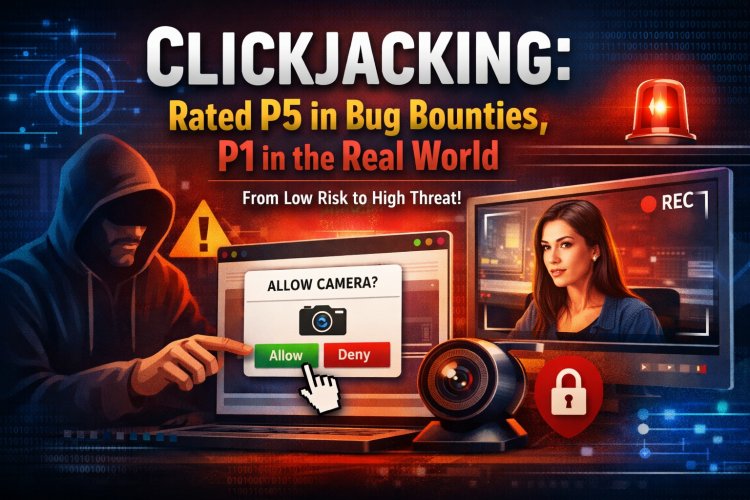
Clickjacking is commonly classified as a low-severity vulnerability (P5) within bug bounty platforms such as Bugcrowd and HackerOne. Because it often lacks direct server-side impact, many organizations mark it as out of scope or assume it poses minimal risk.
However, in real-world attack scenarios, clickjacking can be far more dangerous than its classification suggests.
This article is inspired by insights shared by Vedavyasan S in a LinkedIn post highlighting how clickjacking can escalate into serious privacy threats when exploited outside controlled vulnerability reporting environments.
Original LinkedIn Post by Vedavyasan S:
https://www.linkedin.com/posts/ved4vyasan_cybersecurity-hacking-activity-7426585904372293632-FRvh/
Why Clickjacking Is a Real-World Security Threat
Clickjacking is a user interface manipulation attack that deceives users into clicking hidden or disguised elements. While it may not compromise backend systems, attackers can weaponize it to exploit user trust.
In real-world abuse cases, clickjacking can be used to:
-
Impersonate legitimate or vulnerable websites
-
Trick users into granting browser permissions
-
Exploit invisible iframes and deceptive overlays
-
Target individuals rather than infrastructure
This makes clickjacking a user-centric attack, where the real victim is the end user—not the server.
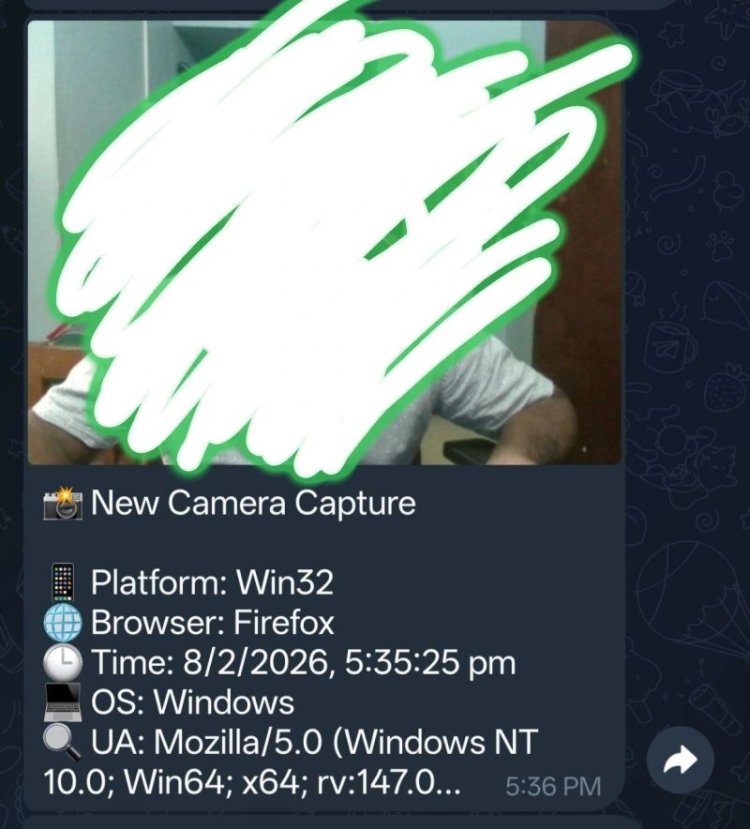
From Clickjacking to Unauthorized Camera Access
One of the most alarming risks discussed by Vedavyasan S is the potential for unauthorized camera access.
By manipulating UI elements, attackers can trick users into approving browser permission prompts for:
-
Camera access
-
Microphone access
-
Screen sharing
-
Other sensitive browser actions
These attacks do not require malware or exploits—only social engineering combined with UI deception.
Why Bug Bounty Programs Often Downgrade Clickjacking
Bug bounty triage systems prioritize:
-
Server compromise
-
Data exfiltration
-
Authentication bypass
Since clickjacking does not always meet these criteria, it is frequently rated low or ignored. But from an attacker’s perspective, user access can be more valuable than server access.
Preventing Clickjacking Attacks
Clickjacking is preventable through basic web security measures such as:
-
Implementing
X-Frame-Optionsheaders -
Using
Content-Security-Policy (frame-ancestors) -
Restricting unnecessary browser permission prompts
-
Protecting sensitive UI elements
Despite being simple, these protections are still missing on many websites.
Conclusion from RoxoHost
Clickjacking may be labeled as P5 in vulnerability reports, but in the real world it can easily become a P1 privacy threat.
As highlighted by Vedavyasan S, ignoring clickjacking means ignoring user safety. At RoxoHost, we strongly advocate treating clickjacking as a serious security issue—especially for platforms that rely on browser permissions and user interaction.
Author Credit:
Inspired by a cybersecurity awareness post by Vedavyasan S
Source:
https://www.linkedin.com/posts/ved4vyasan_cybersecurity-hacking-activity-7426585904372293632-FRvh/